
How to Turn Faster AI Coding into Faster Software Delivery
Vietnam – October 07, 2026 – For enterprise technology leaders, AI coding assistants offer practical ways to generate code, draft tests, refactor applications, and investigate errors. The harder question is how improvements in individual tasks translate into reliable software that reaches users.
A feature can be implemented quickly and still wait for an architecture decision, an integration dependency or release approval. That gap between coding speed and delivery speed is the central issue in assessing AI productivity.
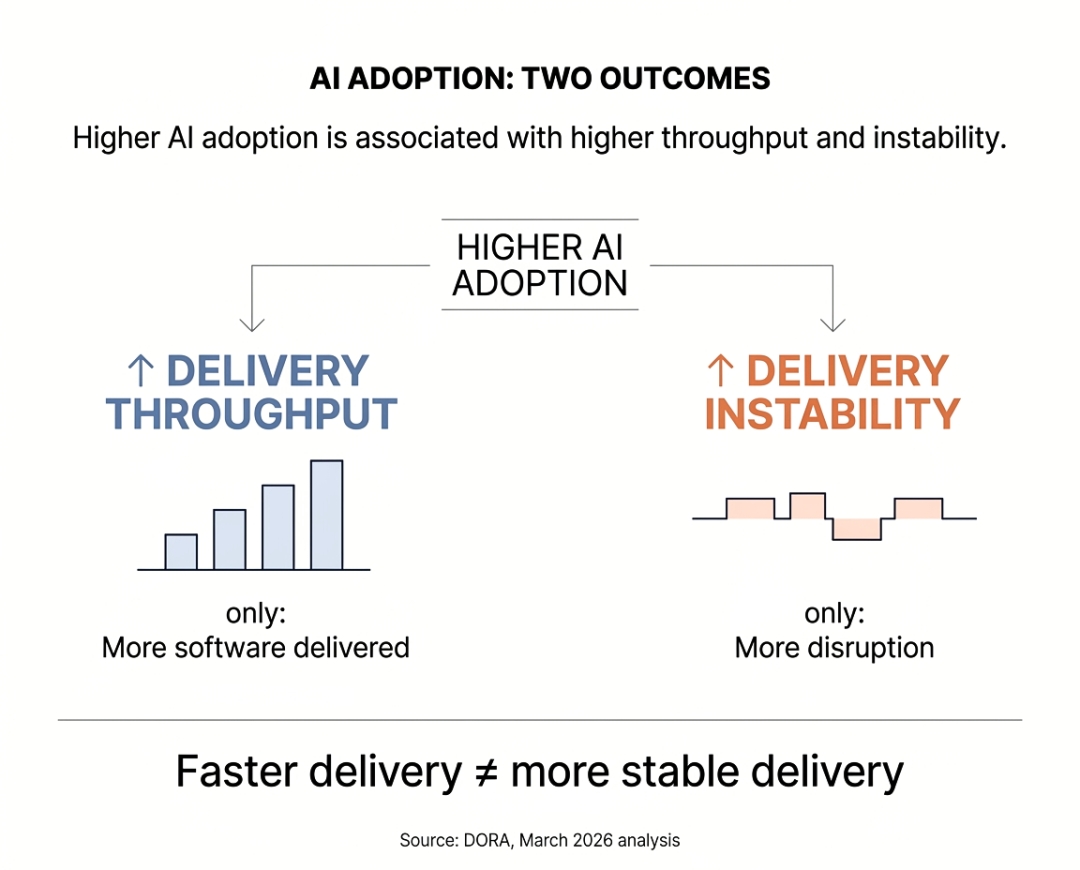
DORA’s March 2026 analysis reports that higher AI adoption is associated with both increased software delivery throughput and increased delivery instability. It also describes how time saved generating code can shift into auditing and verification. These findings point to the importance of evaluating the full delivery process. Source: DORA’s March 2026 analysis.
Saigon Technology, a Vietnam-based software development company serving international clients, describes its approach as AI-native. In its published service materials, AI assists implementation while engineers retain responsibility for technical judgment and validation.
Faster coding is only one part of delivery
A new feature still has to fit an existing architecture. Data needs to move correctly between systems, integrations need to work, and testing needs to validate the implementation. Infrastructure must support deployment, while the production system needs to remain reliable.
AI can accelerate many of these activities, but it does not remove the dependencies between them.
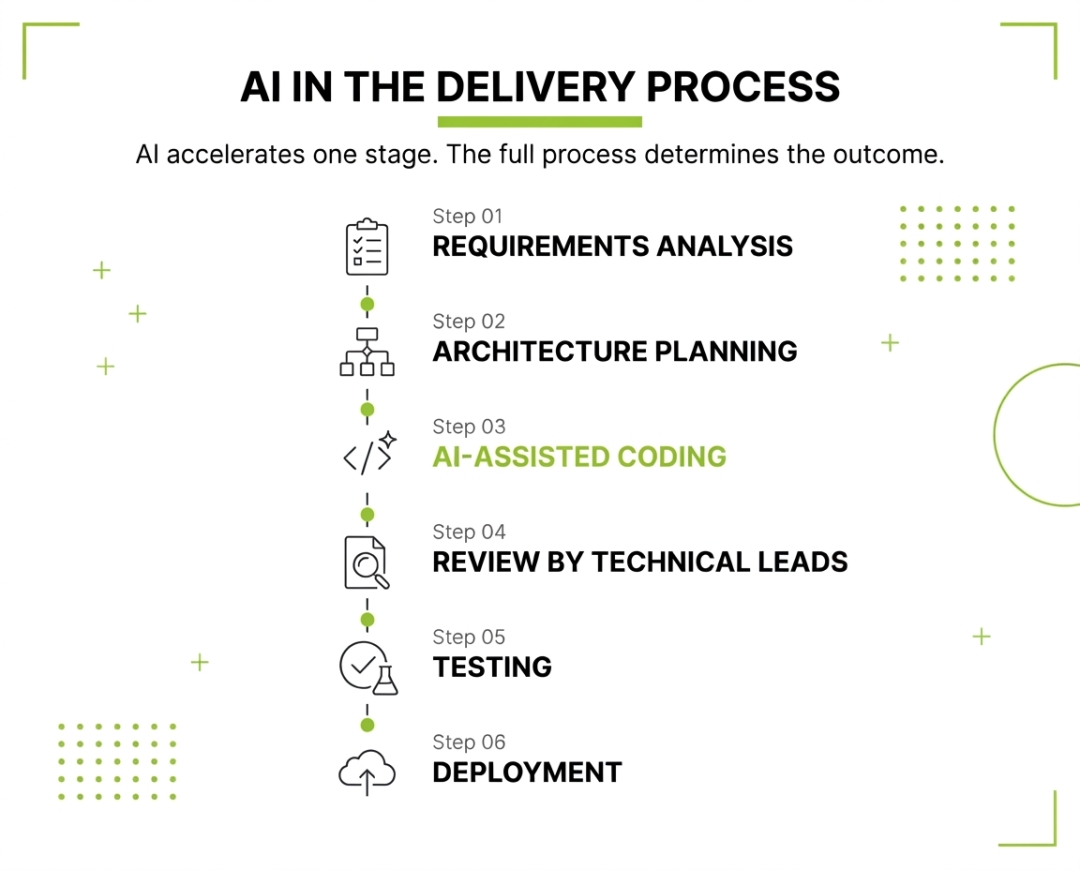
The company’s published development process covers requirements analysis, architecture planning, AI-assisted coding, review by technical leads, testing, and deployment. It describes both manual and automated testing, user acceptance testing before release, and documented rollback plans. These activities place code generation within a sequence of engineering checks. Source: custom software development process.
What the AI approach covers
Using AI to help engineers develop software and adding AI functionality to a customer’s application are related but distinct activities. Saigon Technology publishes services for both.
Its AI modernization offering includes assessing existing applications, recovering business rules from legacy code, and using AI to assist refactoring. The published process emphasizes understanding existing behavior before changing the system. Source: AI modernization services.
Its generative AI integration offering connects language models with existing applications, data, and workflows. The service description includes connections to enterprise systems through APIs, supported by data pipelines, safeguards, and monitoring. Specific functionality depends on the project’s requirements and agreed scope. Source: generative AI integration services.
These are descriptions of engineering services and a delivery approach. The term AI-native should not be read as a promise that software is produced autonomously or that every project will achieve the same improvement in speed or cost.
Engineering judgment remains part of the work
AI can suggest implementations, identify patterns, and produce code. Enterprise systems still require decisions about architecture, sensitive data, operational risk, and long-term maintenance. Those decisions depend on the system’s context and the people responsible for it.
For example, engineers may need to decide whether to extend an existing platform or introduce a new service, how to handle simultaneous transactions, and which technical debt to address first. Generating a plausible implementation does not resolve those trade-offs.
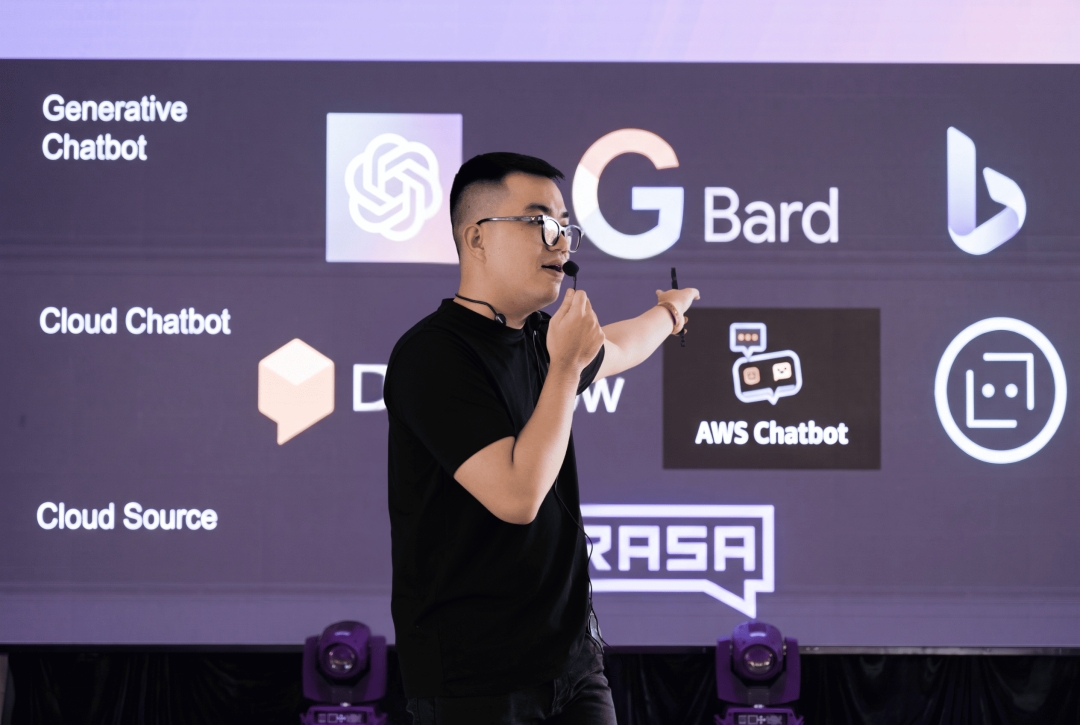
Saigon Technology AI Tech Lead presented at an industry technology event.
Saigon Technology’s position is that AI should amplify engineering expertise, not replace it. Its published development approach assigns code review to technical leads and keeps engineering judgment with people.
Assessing cost and delivery outcomes
The economics of AI extend beyond the cost of a coding assistant. Model usage, token consumption, agent execution, infrastructure, review and rework can all affect the effort needed to deliver a usable result.
An AI agent can produce code quickly, but that code still needs to be reviewed and tested. If an implementation introduces an architectural problem or a security vulnerability, subsequent debugging and rework can offset the initial time saving.
The original productivity question therefore remains relevant: how much useful software can an organization deliver with its available engineering capacity? The idea of engineering leverage is a way to frame that question, rather than a standardized measurement on its own.
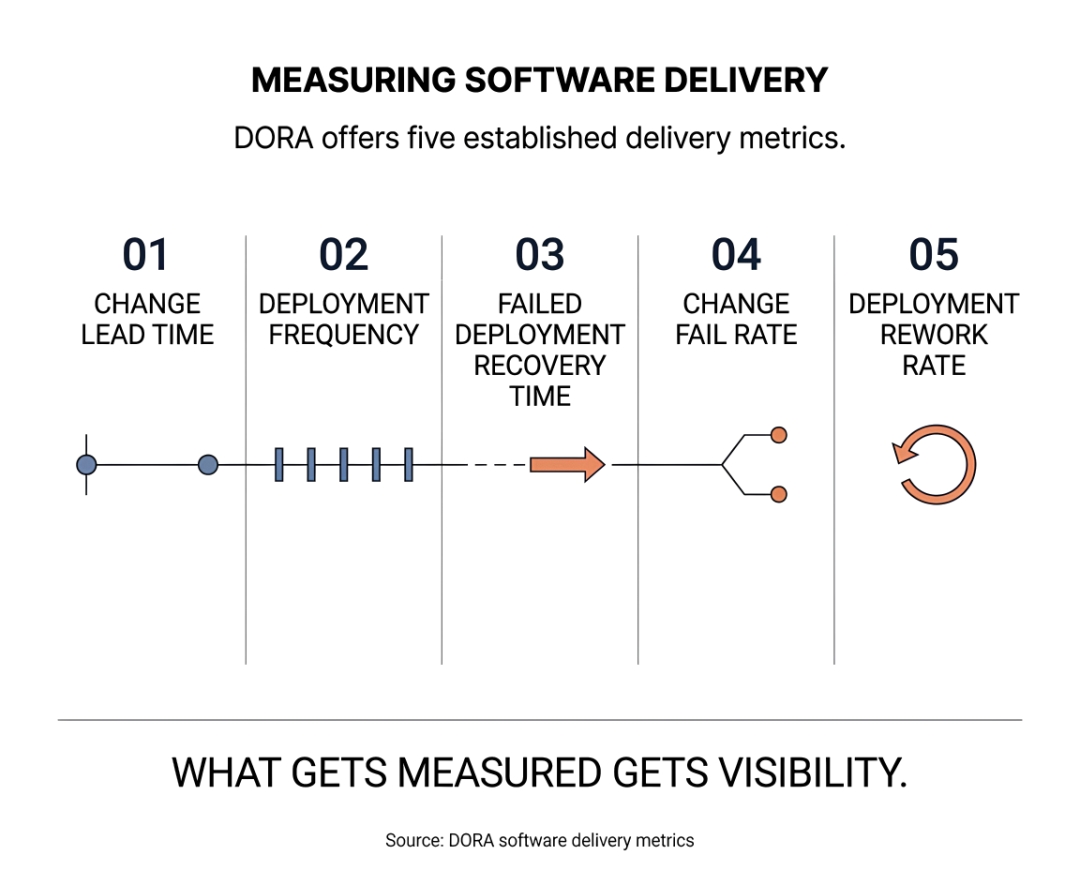
DORA’s software delivery metrics offer one established starting point: change lead time, deployment frequency, failed deployment recovery time, change fail rate, and deployment rework rate. Tracking these together for the same application or service helps put release speed in context. Source: DORA’s software delivery metrics.
For a commercial assessment, delivery measures can be considered alongside total project cost and whether the software meets its intended business needs. A faster implementation is valuable when it contributes to a usable, maintainable result; it is not, by itself, evidence of lower overall cost.
Extending capacity through an AI-native offshore team
Enterprises can develop their internal teams or work with an external engineering partner. An offshore development center, or ODC, is one way to establish continuing development capacity.
Saigon Technology describes its Vietnam ODC service as a dedicated engineering team working under the client’s processes and technical direction. The AI-native approach integrates AI into the engineering workflow to support coding, testing, documentation, and analysis, while senior engineers remain responsible for architecture, review, security, and production readiness. The model is intended to retain product knowledge across releases, rather than ending with a single project. Source: Vietnam ODC services.

Saigon Technology engineers reviewing an AI-assisted build together.
The relevant question is how that team fits the work: which skills it brings, how it collaborates with internal engineers, and how responsibilities for review and release are assigned. Headcount and hourly rates provide only part of that picture.
An external team can add capacity, but the result depends on scope, coordination, and the existing system. The model itself does not establish a guaranteed delivery date or productivity gain.
For technology leaders, the practical objective is to integrate AI into the engineering process without losing focus on reliable delivery. Saigon Technology’s published services illustrate that connection through software development, modernization, integration and dedicated engineering teams. Their value in a particular engagement should be assessed against the requirements, responsibilities, and outcomes agreed for that project.
About Saigon Technology
Saigon Technology is the brand associated with STS Software Technology Joint Stock Company (Công ty Cổ Phần Công Nghệ Phần Mềm STS), a Vietnam-based provider of software development services. Its publicly listed offerings include custom software, web and mobile application development, AI services, and offshore development teams.
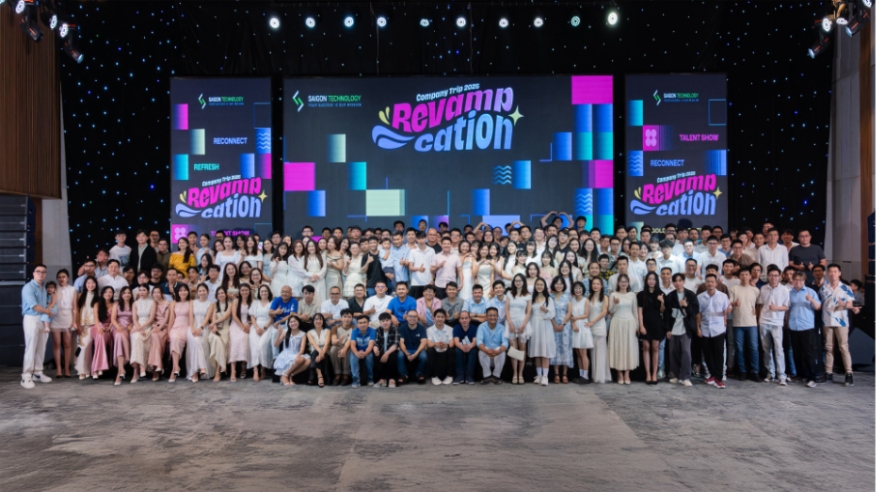
Saigon Technology team members at a company event in Vietnam.
Media Contact
Company Name: Cong ty Co Phan Cong Nghe Phan Mem STS
Contact Person: STS Software Technology Joint Stock Company
Email: Send Email
Address:1st Floor, Aloha Building, 68 Hong Ha Street, Tan Son Hoa Ward
City: Ho Chi Minh
Country: Vietnam
Website: https://saigontechnology.com/


